How to Prepare Your Home for a Professional Paint Job in Danbury, CT
Hiring a professional painter is a smart investment in your home — but many homeowners in Danbury, Ridgefield, Wilton, Bethel, and Newtown ask the same question before their project begins:
“What do I need to do before the painters arrive?”
The short answer? Not as much as you think — if you hire the right contractor.
At Marin’s Painting Service, we handle the heavy lifting. But there are a few simple preparation steps that help your project run smoothly, protect your belongings, and ensure the highest-quality finish possible.
This guide walks you through exactly how to prepare your home for a professional paint job — whether you’re painting one room or your entire house.

If you’re planning residential painting in Danbury, CT, understanding the preparation process helps ensure your project runs smoothly from start to finish.
Step 1: Confirm the Scope of Work Before Prep Begins
Before you move a single piece of furniture, confirm:
- Which rooms are being painted
- Ceilings included or walls only
- Trim, doors, or closets included
- Accent walls
- Repair work (patching, sanding, caulking)
- Paint color selections finalized
This avoids last-minute changes that disrupt scheduling.
A professional contractor should provide a clear written scope before project day.
Step 2: Remove Small and Fragile Items
Even when painters use drop cloths and plastic protection (which we do), the safest approach is to remove:
- Picture frames
- Wall décor
- Mirrors
- Breakables
- Tabletop items
- Small electronics
- Lamps
Think of it this way: if it would be inconvenient to replace, move it.
For homeowners in older Ridgefield and Wilton homes especially, delicate décor and heirloom items are common — better to clear them out completely.
Step 3: Move Furniture (Or Clarify Who Is Responsible)
This is one of the most common questions.
A professional painting company should be willing to move large furniture carefully and return it after the project — but expectations must be clear.
You typically have two options:
Option A: You Move Furniture in Advance
Best for:
- Extremely heavy pieces
- High-value antiques
- Tight rooms
Option B: Your Painter Moves Furniture
Professional painters will:
- Move items to the center of the room
- Cover everything with plastic
- Protect flooring
- Reposition furniture afterward
At Marin’s Painting Service, we protect floors with drop cloth systems and fully wrap furniture before work begins.
If you’re unsure what professional standards look like, this article explains the difference between experienced contractors and lower-cost crews:
Step 4: Provide Clear Access to Work Areas
On project day, painters need:
- Clear hallways
- Clear staircases
- Access to outlets
- Access to bathrooms (if pre-arranged)
- Space for ladders
In multi-level homes in Bethel or Newtown, this is especially important — tight stairways can slow down production if cluttered.
Small prep efforts here dramatically increase efficiency.
Step 5: Address Wall Repairs Ahead of Time (If Needed)
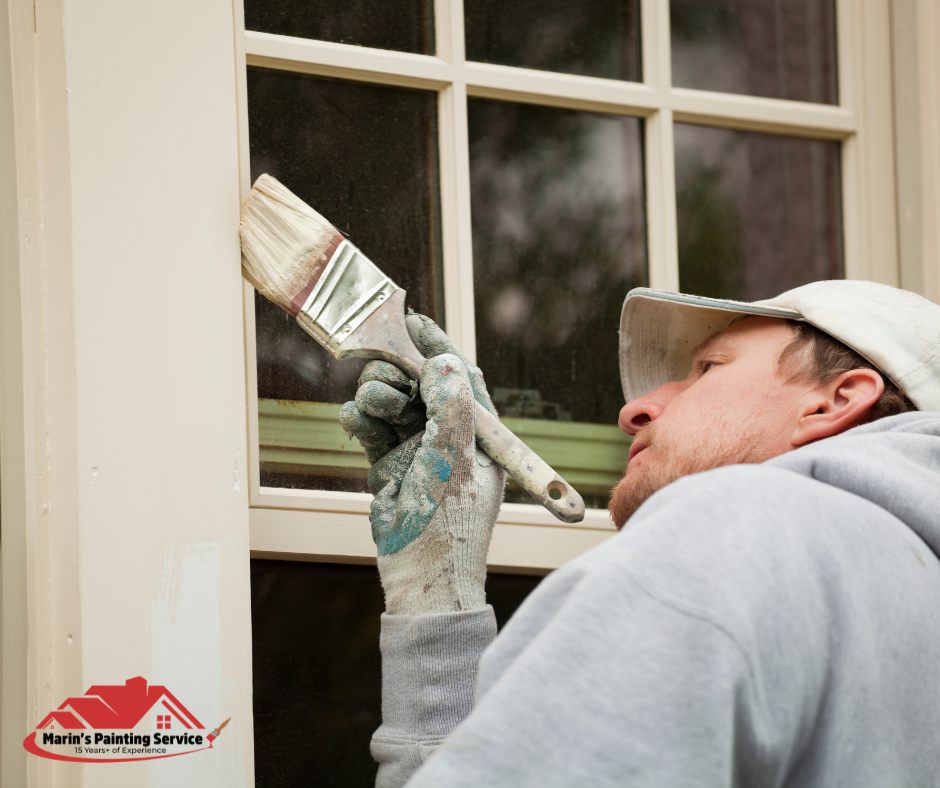
Professional painters can repair:
- Nail holes
- Minor drywall damage
- Settlement cracks
- Caulking gaps
- Surface imperfections
However, if your home has:
- Water damage
- Structural drywall issues
- Mold
- Large plaster cracks
Discuss these in advance during your estimate.
Step 6: Clean the Walls (Sometimes)
This depends on the area being painted.
Interior Walls
In most homes, painters will:
- Lightly sand
- Spot clean
- Prime as needed
However, in kitchens, bathrooms, or homes with:
- Heavy cooking residue
- Smoke buildup
- High humidity
It helps to wipe down greasy areas beforehand.
Exterior Painting
Exterior prep is usually handled by professionals via:
- Power washing
- Scraping
- Sanding
- Priming
If you’re planning exterior painting in Danbury or exterior painting in Ridgefield, surface prep is often more extensive and contractor-managed.
Step 7: Secure Pets and Children
Paint crews move quickly and use:
- Ladders
- Sprayers
- Drop cloths
- Tools
- Open paint cans
For safety:
- Keep pets in a closed room or off-site
- Plan child-free work zones
- Communicate which areas are off-limits
This protects both your family and the crew.
In Wilton and Newtown homes especially, where open-concept layouts are common, planning temporary zones is helpful.
Step 7: Secure Pets and Children
Paint crews move quickly and use:
- Ladders
- Sprayers
- Drop cloths
- Tools
- Open paint cans
For safety:
- Keep pets in a closed room or off-site
- Plan child-free work zones
- Communicate which areas are off-limits
This protects both your family and the crew.
In Wilton and Newtown homes especially, where open-concept layouts are common, planning temporary zones is helpful.
Step 8: Decide Whether You’ll Stay Home During the Project
Most homeowners in Danbury stay home during interior painting — but you don’t have to.
Professional painters:
- Work in sections
- Minimize disruption
- Keep spaces ventilated
- Clean daily
If you work remotely, communicate your needs ahead of time so quieter tasks can be scheduled accordingly.
Step 9: Confirm Paint Colors and Finishes in Writing
Before project start:
- Confirm paint brand
- Confirm color codes
- Confirm sheen (flat, eggshell, satin, semi-gloss)
- Confirm which rooms get which finish
Many repaint issues happen because sheen levels were not clearly discussed.
For example:
- Walls → Eggshell or satin
- Trim → Semi-gloss
- Ceilings → Flat
If you’re unsure about finishes, your painter should guide you — not leave it vague.
Step 10: Remove Outlet Covers (Or Confirm Your Painter Will)
Some companies remove and reinstall:
- Switch plates
- Outlet covers
- Vent covers
Others paint around them.
Professional crews remove them for a clean finish.
At Marin’s Painting Service, we remove covers to ensure sharp lines and reinstall them at project completion.
Step 11: Understand the Timeline
Preparation isn’t just physical — it’s mental.
Ask:
- What time does the crew arrive?
- How many painters will be present?
- How long will each phase take?
- When can rooms be used again?
Clear communication eliminates stress.
What You Do NOT Need to Do
Homeowners are often surprised by what they don’t need to handle.
You do NOT need to:
- Tape your own trim
- Lay down drop cloths
- Sand walls
- Patch holes (unless agreed otherwise)
- Prime surfaces
That’s what professionals are for.
If a contractor asks you to do extensive prep yourself, that’s usually a red flag.
How Professional Preparation Impacts Final Results
Paint looks best when:
- Surfaces are clean
- Repairs are smooth
- Primer is used properly
- Edges are cut cleanly
- Dry times are respected
In high-end Ridgefield and Wilton homes especially, craftsmanship shows.
A rushed prep job leads to:
- Visible roller lines
- Flashing
- Peeling
- Poor adhesion
- Rough finishes
Preparation is 60–70% of the job quality.

Exterior Paint Preparation Is Different
If you’re painting the exterior of your home in Danbury, Bethel, or Newtown, preparation includes:
- Power washing
- Scraping peeling paint
- Spot priming bare wood
- Caulking joints
- Sealing gaps
Exterior prep often takes longer than painting itself.
This is why hiring an experienced exterior crew matters.
Final Checklist Before Painters Arrive
Here’s a simple homeowner checklist:
✔ Remove small décor and fragile items
✔ Confirm color selections
✔ Move valuables
✔ Secure pets
✔ Provide access
✔ Communicate scheduling needs
That’s it.
Professional painters handle the rest.
Preparing Your Home the Right Way in Danbury, CT
If you’re preparing for a paint project in:
- Danbury
- Ridgefield
- Wilton
- Bethel
- Newtown
The best preparation step you can take is hiring a professional company that handles the process systematically.
At Marin’s Painting Service, we:
- Protect flooring and furniture
- Repair surfaces properly
- Use premium materials
- Communicate clearly
- Deliver clean, consistent finishes
Preparation is not about you doing more work — it’s about partnering with the right team.